Showing posts with label and. Show all posts

Tuesday, August 22, 2017

Woody Allen Mia Farrow Dylan Farrow and Soon Yi Previn Old Controversies about False Abuse Accusations Rekindled


Woody Allen wins the Golden Globe’s Cecil B. Demille Award for his life’s work from the Hollywood Foreign Press Association, and an old family war is rekindled for all the public to see. Mia Farrow, Woody's ex girlfriend, criticized the award because of an old accusation that Woody Allen had molested his then seven year old daughter. Then the now 27 year old woman, Dylan Farrow, publishes her own open letter to the New York Times describing in detail what she alleges happened to her:

http://kristof.blogs.nytimes.com/2014/02/01/an-open-letter-from-dylan-farrow/?_php=true&_type=blogs&_r=0

Dylan Farrow

Her description is quite detailed and very much consistent with a lot of stories from abuse victims that I have heard over the years.  

I would first like to say unequivocally that the biggest problem in this country is not that false accusations of child abuse by those claiming to be incest victims are believed, but that the true ones are not. The best studies indicate that about 95% of such claims by adults turn out to be basically true, despite many specific details being recalled erroneously. It’s easy to confuse a blue shirt with a black one or a morning for an afternoon, for example, but one is not likely to get being raped mixed up with taking a trip to the supermarket.

But what about that other 5%? The false accusations? It used to be that overzealous therapists pressured their more suggestible patients into “admitting” to having been abused under the nonsensical premise than anyone suffering from one psychological disorder or another simply must have been abused. Well, a few malpractice suits later, that phenomenon seems to have abated.

The most common situation in which false accusations are made at present is during hotly-contested, super-nasty divorces with child custody being a bone of contention. Such false accusations are tied in with the phenomenon of parental alienation, in which one parent who maintains primary custody fills a child’s head with vicious lies and half-truths about the other parent. Parents who put their kids in the middle of their messy relationships like that are just as deserving of condemnation as a child abuser, because doing so is indeed a form of psychological child abuse.

Which is what makes the Woody Allen case so interesting. 

Before Miss Farrow had her most recent say, Oscar nominated and Emmy winning film director Robert B. Weidepublished a story that had some possibly damning information in it about the whole sordid mess.
http://www.thedailybeast.com/articles/2014/01/27/the-woody-allen-allegations-not-so-fast.html

Now, I am not claiming to know the truth in the case. Repeat, I am not claiming to know the truth about what may or may not have happened to Miss Farrow. I can only make some general comments about publically available information, which never tells the whole story. As to Mr. Weide’s article, IF IT IS ALL TRUE AND COMPLETE (I’ll be repeating a version of that phrase several times, since some readers will undoubtedly not catch it the first few times), I can point out that there are an awful lot of the most typical indicators of a false accusation absolutely aglow in this story, at least as reported by the author of the piece.

Still, this does not necessarily mean that the accusations are false, or that Mr. Allen (no relation) is telling the truth about being innocent. Repeat, nothing discussed in this post proves anything one way or the other.

If you want to know how children can be induced to tell adults whatever the adults want to hear, I recommend a movie calledIndictment: the McMartin Trial, about a preschool scandal in Southern California in the early 1980’s. The alleged abusers were all eventually exonerated, but not before overzealous social workers elicited highly detailed stories from the children that were believed in spite of there being absolutely no evidence that they ever occurred, and which defied credulity in the first place. Like a story of a class field trip to the set of a pornographic movie.


At the time of the original allegations made by Woody Allen’s girlfriend-at-the-time Mia Farrow, Woody was having an inappropriate affair with Mia’s adopted daughter Soon-Yi Previn. Mia allegedly found out about the affair when she found naked pictures of her daughter taken by Woody. An affair with her own daughter!  (Soon-Yi was at least 19 at the time, and Woody Allen’s extent of “parental” involvement was taking the girl to the occasional basketball game, so it is not true that he was her stepfather. Mia and Woody did not live together, were never married, and Soon-Yi’s adopted father was Andre Previn).

So, as Mr. Weide points out, “It’s understandable that Mia would remain furious with Woody for the rest of her life.”  She would have reason to suspect Woody of the worst possible behavior.  Of course, she herself was an admitted cheater who apparently had more than one affair herself during her life. Maybe Woody was the one who got angry first. Who knows? The point is that there was a lot of anger involved in this break up, which makes this fertile ground for possibleparental alienation behavior on Mia’s part.

According to the article by Weide,

On August 4, 1992, almost four months after the revelation about Woody and Soon-Yi’s relationship understandably ignited a firestorm within the Farrow household, Woody was visiting Frog Hollow, the Farrow country home in Bridgewater, Connecticut, where Mia and several of her kids were staying. During an unsupervised moment, Woody allegedly took Dylan into the attic and, shall we say, “touched her inappropriately.” Later in the day, it was alleged that the child was wearing her sundress, but that her underpants were missing. The following day, Mia’s daughter allegedly told her mother what had happened, and Mia put the child’s recounting of the story on videotape as evidence... 

If Mia’s account is true, it means that in the middle of custody and support negotiations, during which Woody needed to be on his best behavior, in a house belonging to his furious ex-girlfriend, and filled with people seething mad at him, Woody, who is a well-known claustrophobic, decided this would be the ideal time and place to take his daughter into an attic and molest her, quickly, before a house full of children and nannies noticed they were both missing...

As for the evidentiary videotape of young Dylan’s claims, it’s been noted that there were several starts and stops in the recording, essentially creating in-camera “edits” to the young girl’s commentary. This raises questions as to what was happening when the tape wasn’t running. Was Mia “coaching” her daughter off-camera, as suggested by the investigators? Mia says no—she merely turned the camera on whenever Dylan starting talking about what Daddy did. Maybe we should take Mia at her word on this. Since I wasn’t there, I think it’s good policy not to presume what took place...

A New York Times article dated March 26, 1993, quotes from Mia’s own testimony, during which she recalled taking the child to a doctor on the same day as the alleged incident. Farrow recalled, “I think (Dylan) said (Allen) touched her, but when asked where, she just looked around and went like this,” at which point Mia patted her shoulders. Farrow recalls she took Dylan to another doctor, four days later. On the stand, Allen’s attorney asked Mia about the second doctor’s findings: “There was no evidence of injury to the anal or vaginal area, is that correct?” Farrow answered, “Yes.”...

Former nanny Monica Thompson (whose salary was paid by Allen, since three of the brood were also his) swore in a deposition to Allen’s attorneys that she was pressured by Farrow to support the molestation charges, and the pressure led her to resign her position. Thompson had this to say about the videotape: ““I know that the tape was made over the course of at least two and perhaps three days. I recall Ms. Farrow saying to Dylan at that time, ‘Dylan, what did daddy do… and what did he do next?’ Dylan appeared not to be interested, and Ms. Farrow would stop taping for a while and then continue.”...

Dr. John Leventhal further swears Dylan’s statements at the hospital contradicted each other as well as the story she told on the videotape. “Those were not minor inconsistencies. She told us initially that she hadn’t been touched in the vaginal area, and she then told us that she had, then she told us that she hadn’t.” He also said the child’s accounts had “a rehearsed quality.” At one point, she told him, “I like to cheat on my stories.”

And then there was this quote from Moses Farrow - Dylan's brother, also adopted, and now a 36-year-old family therapist: "My mother drummed it into me to hate my father for tearing apart the family and sexually molesting my sister," Moses Farrow, 36, told People Magazine. "And I hated him for her for years. I see now that this was a vengeful way to pay him back for falling in love with Soon-Yi." He added, "Pleasing my mother was very powerful motivation [for Dylan] because to be on her wrong side was horrible." 

Dylan called her brother's statement a betrayal.

It’s also interesting that Mia Farrow’s brother, John Charles Villiers-Farrow, has been convicted of multiple counts of child molestation. Mia may have exposed her children to him, so maybe there is a perp that is not Woody.

These observations, if true and complete, raise some serious questions about whether Dylan might be being loyal to her mother by repeating her not-really-true story in the press after her mother brought the subject back to public attention after the Golden Globes.

So, after reading this, anyone who thinks that Dylan’s accusation simply must be true or simply must be false is either highly defensive, blinded by anger, or a simpleton. No offense.

As someone who has studied dysfunctional families for almost 40 years, and who specializes in helping adults who were abused by attachment figures as children successfully confront their abusers, I want to add a few more random random thoughts about the case:    

1.  While reporting ongoing child abuse to the police and prosecuting the perp to the full extent of the law is absolutely essential, airing dirty laundry in public this long after the fact is almost always counterproductive for the victim. Victims may think they would feel a lot better if they get either revenge or just plain old justice for the perpetrator, and they may for a short time. But they are still left with a gaping hole in their soul where their family should be, and they often still have great difficulty self actualizing, or successfully charting their own course in life. As my readers know, I recommend that my patients work with me to discover ways to get past their family member’s formidable defenses and confront the issues involved head on.

2.  There's ALWAYS more to the story that abuse victims and other family members tell people about - even people who know them very well, let alone strangers or the public. Sometimes my patients leave out essentials of their experiences for MONTHS into therapy.

Victims of child abuse are much more likely to hide their parent's behavior than they are to exaggerate it.  

3.  That Dylan Farrow came from a highly dysfunctional background that harmed her seems to be a near certainty, but the details that we know about this case raise a lot more questions than they answer about what actually happened. 

Events in a family can be lied about out of loyalty by one family member to another. I would certainly want to ask about Dylan's relationship with her mother. If Dylan was abused, that means that Mia failed to protect her daughter in this case. Many abuse victims are more angry with the non-protective parent than with the abuser!  Sometimes that anger is covered up. In a reaction formation, the person obsessively loves and/or idolizes the person she's really furious with.  (Not saying it's true, but if Mia coached Dylan and pressured her to make the accusation, this could create a LOT of interesting scenarios).

That some of the Mia's children are angry with her seems likely. As I mentioned earlier, it was reported that Mia found out about Woody's relationship with Soon Yi by finding nude pictures of her around the house, taken by Woody. If this is true, why would Soon Yi, who was an adult at the time, have a sexual relationship with her own mother's boyfriend and then conveniently leave evidence about it lying around the house for Mom to find? (Did she leave it around accidentally? Bullshit). If this is true, then to surmise that Soon Yi is really pissed with her mother is probably a safe bet. Whyis she so angry? That would be an interesting story.

I also find it fascinating that Soon Yi seems to get a free pass on her relationship with Woody – she married him and adopted children with him and they are still together - from all the people who are absolutely certain that Woody is a pedophile.

We also know by her own admission and a pregnancy that there was cheating in Mia's past, and families in which infidelity is the norm create a lot of chaos for children. Certainly child sexual abuse could also be present, but it would just as certainly not be required for this "family" to be severely dysfunctional.

Sunday, August 20, 2017

Is consumer culture making us anxious and depressed


According to one recent ABC News story, yes, it is:
Margit Burmeister, professor of psychiatry and human genetics at the University of Michigan, said it "makes very good sense with what we know of lifestyle changes in the past 50 years" that our consumer culture is affecting mental illness.

She added that "genetic vulnerability [to mental illness] is the other side of the coin that needs to be kept in mind" -- in other words, as our society piles more and more stress onto its citizens, those who are predisposed to crack under the pressure, will...

Dr. Bruce Rabin, medical director of the Health Lifestyle Program at the University of Pittsburgh Medical Center, said that beyond our society's focus on external goals, the stress level among parents in recent times has impacted the type of children we raise.

Children today "lack meaningful, healthy role models," Rabin said.

"They learn from those they love...if role models are short tempered [or] tell children to leave them alone because they are under a lot of stress...there will be an effect on the child's mental health development."

In this way, he said, children learn which aspects of life to make a priority. Relationships take a back seat, and work, success, material gains take precedence.

Lots of statistics speak to the validity of this opinion. There's no question that society is more atomized than it used to be -- that people are more geographically mobile, hold more jobs during their working years, work longer hours but are less likely to make enough money to be able afford to buy a house, and are less likely than they used to be to be part of a strong community. (See the book Bowling Alone for as many statistics along these lines as anyone will ever need.) Thanks to the growth of corporate America, there are more and more cookie-cutter office parks and shopping centers than ever, and fewer and fewer places that are culturally unique or untouched by commercialism. (Thank you, Starbucks.) Television, the internet, and the advertising and public relations industries saturate our lives with images of "the good life" while pushing on us an endless parade of products we don't really need. (Spend some time with the most recent SkyMall catalog if you don't know what I'm talking about.) A society that used to treasure privacy now produces more than a few citizens whose primary life goal is seemingly to land a spot on reality television. (E.g., the attention-whore couple who recently attended a White House function without an invitation.) It's no surprise that recent decades have brought alarming mental illness growth rates.

So what's to do? According to the article, "If increased materialism and decreased community are really to blame -- at least in part -- for this trend ... then interventions may have to be taken at the societal level."

In other words, we're screwed.

Guest Post Addictions and Development


Today's guest post is by Emma Haylett. She decribes growing up with an alcoholic father who literally tried to recruit her as his drinking buddy, and in the process put her smack dab in the middle (triangulation) of her parents' relationship. This may be a telling example of someone in the role of go-between.


A Revelation

My father bought me my first 6-pack of beer. I was only 14 at the time and drank it behind closed doors, away from him and the rest of my family. It was a late summer night and I remember my mother was already hidden away in her room, lights off, TV on such a low volume like she was whispering with ghosts. Dad sat in a broken recliner watching western violence, occasionally calling my name to come drink with him. Instead, I wrote. I started writing before I popped the first cap and continued to do so after all of them were empty and stagnant around me.

I knew the other kids at my school drank. I knew my dad drank. I watched him every day, but what I didn’t realize was the problem he held. Within the next two hours, I was dizzy and tired. The spoken words of my father were surrounded in quotation marks intermittently written down the page, phonetically spelled out: “Em-uhh,” “ehmm,” and “c’mon to the livin’ room, now.” 

As my state of clarity became more and more unclear, my dad’s stayed exactly the same. I didn’t know he was permanently inebriated until pouring over my notes the next morning. This revelation became something of an alcohol abuse study for years.

My mother never noticed the extra beer my father bought. I think she always assumed Dad was going to drink them, and it was a fair enough assumption. As he pressured me to drink them, I would sip slowly and watch him become more intolerable by the bottle. It didn’t taste good and I don’t remember it feeling good either. 

His speech slurred to the point of intelligibility and his breath was something similar to a laboratory experiment gone wrong. His actions embarrassed me – he would yell at the television if a star delivered a line poorly, and wrap his arm around my shoulder to tell me how to buy liquor underage. Whenever my mother entered the room, his face became tired and uninterested.

One evening, after Dad was snoring deeply in the chair, my mother sat me down and asked me if I drank with him. Of course I didn’t lie – I told her he would give me a few bottles and we would watch TV together. She told me Dad wasn’t healthy and that what he was drinking wasn’t, either. She told me he was always cracking cans since he was about my age, partying much too hard with his friends and family. I wasn’t old enough, she very sternly told me, “and your dad’s decisions reflect poorly upon this family.” I stopped drinking with him after that night.

Family Treatment

Dad was kinder in the early hours of the day and progressively became more incoherent and rude towards the time he usually passed out in the recliner. I come to realize, from lengthy trial-and-error experiments, that the trick to getting lunch money, permission to go out on school nights, or even a small favor was asking him in the mornings after his first coffee with a whiskey cream substitute. 

My mother took the opposite route and, when she thought I wasn’t around, suggested rehab programs later in the evenings, or else, she threatened, she would leave…again and again. But she never did. Their relationship became empty threats with the two of them screaming about whose turn it was to buy essential toiletries with the little money we had, and who was going to raise their daughter standing behind them unnoticed.

There was more hidden behind my father’s alcohol addiction than what was obvious: the empty bottles clacking together as he put another one down was always accompanied by false affection when we had father-daughter talks around the dining room table late at night about being a responsible adult, trust, and his image of love. I learned that being responsible was saving a bit of grocery money for a tall bottle of cheap alcohol. Trust was believing him when he said, “Just one more,” and love was “don’t tell your mother” followed by a bribe.  

Promises to attend my school-sponsored activities came to a screeching halt as the more dangerous drugs became the better part of him. I once found him asleep in the truck idling in the driveway with the windows down and a burnt cigarette between his still fingers. The long stem of ash flaked away as I shook him to remind him that he was supposed to take me to school.

Emotional Detox

I lied to my friends. I lied to my teachers, and I lied to myself - for years. It goes without saying that I don’t trust long or often. I had a hard time believing my ex-fiancĂ© Jake was going for a quick run to the gas station without bringing home a brown paper sack around a bottle or plastic baggie of some substance. I am reminded of being alone when my new neighbor’s empty beer cans crash and echo against each other as she pushes her trash bins to the curb every Thursday morning. I am still angry at my mother who should have tried harder to get my father some help.

I always wished he would have even considered alcohol rehab. I firmly believe our family life could have been different, saved even, with detox and therapy. As an adult, I hesitate to show affection and honesty. I have daylight visions of my father wrecking the truck. I lose hours of sleep over the conversations I should have had with Jake about trust and what it means to be loved without stipulations.

Looking back, it’s hard to know what it is I was feeling. From adulthood, it is easy to know that my father was using me as a crutch, as a tool with which to hurt my mother. And I dutifully played the part of loyal daughter to both of them. I was a substitute, in many ways, for their relationship—an embodiment of the good in my father as my mother saw him, a (albeit young) drinker still capable of offering love - and so she ignored it. For my father, I was a female who served as his caretaker and confidant, a secret-keeper who acted without judgment, an enabler. While my father was dependent upon alcohol, I was simply (or not so simply) using it—more on that here. This was my first experience as an enabler too.

I do remember feeling trapped in between them and, because they were my parents equally, wanting to please both. If I could do it simultaneously, even in secret, it felt like a win. I didn’t like the taste or feel of alcohol, but I also didn’t like the way my father breathed my name until I came out. For me, this drinking was easier, especially since I never outright lied to my mother. Like my father, I had my justifications.

Therapy

I’ve learned that addiction is better treated as a disease. With a non 12-step program, doctors treat addicts with proper medical treatment as you would any other chronic medical illness. Working with addicts in this program has taught me that sometimes you can’t rely on having faith or attending self-help meetings. Sometimes real help (however you find useful to define it) is necessary. 

Addicts can come to an understanding of trust and commitment, as well as formulating a self-betterment plan that is supported by people like me. I provide the guidance and encouragement as well as sensitivity to the issue.

My father would always get upset if the word “addiction” was even quietly muttered.

I realize what it is like to be an addict. I watched and recorded one my entire life. To approach the issue with proper intelligence and caution is critical – to provide them with real courage and motivation rather than standing idly by will push the addict towards getting the appropriate help and the chance of staying healthy will greaten. It’s a very rewarding opportunity to be there for somebody and to see them succeed.

I help myself by helping people overcome these dangerous addictions. I help them make that sensitive reconnection to their family and children. There is always hope that they can raise their kids to live without being exposed to the fear and emotional emptiness that that I hold inside and that is so overwhelming. Getting help can change more than one life. That first step is always the hardest, but I know in my heart of hearts it can make a difference.

Author Bio: Emma Haylett finds comfort in writing. When she’s not helping coordinate non 12 step recovery programs for addicts and their families, you can find her watching terrible made-for-TV movies.

Are the National Institute on Drug Abuse and Big Pharma in Bed


Nora Volkow, M.D.

At the annual meeting of the American Psychiatric Association (APA) in San Francisco in May, Nora Volkow, the director of the National Institute on Drug Abuse (NIDA) was just brimming with a lot 'o news about the square of the hypotenuse. No, I'm sorry, I mean about how much more we know about drug abuse because of brain imagining techniques. This new knowledge she spoke of was summarized in the Psychiatric News, the newspaper of the APA, in the June 21 issue.

The gist of the story was that the drugs themselves impair certain brain circuits, which must then be somehow strengthened through treatment.

One of the points she raised is that drugs like methamphetamine cause dopamine receptor signaling to be decreased in the pre-frontal cortex - the part of the brain known to be crucial in executive control (decision making). Thus, the normal brakes on someone indulging in something are supposedly damaged.

If this be true, one might think that she would be up in arms about the widespread, indiscriminate use of amphethamines like Adderall in children. At the very least, a high percentage of ADHD diagnoses are given to kids suffering from the effects of living in a chaotic environments of one sort or another, and for whom family therapy would be the most important treatment. Perhaps there are some cases of ADHD that are due to neurotoxin exposure or something like that in which the benefits of the use of stimulants outweigh the risks - a questionable assertion itself since the average academic gain for ADHD-diagnosed kids on stimulants is all of about three whole months.

For some reason, however, while she acknowledges in other venues that prescription drug abuse, including that of stimulants, is a major problem, she continues to maintain that stimulants are safe and effective when used for ADHD.

She does admit in one article that ritalin basically works the same way in the brain as cocaine! So is she saying that there is some point at which the alleged adverse affects on executive functioning she was going on and on about at the APA magically become inconsequential?

And yet, she also spends some of her time exaggerating the adverse effects of the devil weed , marijuana, in a campaign to keep it illegal.  It seems there is a double standard she has towards the risks of the drugs sold by Pharma compared to those that are not.

How much worse than the physiological effects of pot, one might ask, are the adverse effects on potheads of jailing them and turning them into felons for the rest of their lives. Or the risks to black kids? They are no more likely than white kids to smoke pot, but are four times more likely to be arrested for it. These are not adverse effects?

"Think about it: Do you want a nation where your young people are stoned?" she was quoted as asking.  I hate to break this to her, but any kid who wants to get marijuana already can. It's like one of the biggest cash crops in several states.

I don't think she has come out in favor of prohibition against alcohol or tobacco, two substances with far more potential adverse physiological effects than pot ever thought about having, so that she might at least be consistent. Does she think that young people aren't already getting "stoned" on booze? As mentioned, she does not seem to be all that concerned about the adverse effects of the stimulants - that she herself describes - when used for legal and "proper" uses. More on that in a sec. Nor does she mention that prescribed stimulants are diverted to "non-medical" uses far more often than even opiates!

It seems almost like she thinks the risks of drugs are entirely dependent on whether or not drug companies make money from them.

I am not surprised by any of this. Many years ago I listened to a talk from someone from NIDA about the horrible effects of dopamine depletion in the brains of regular amphetamine users.  I thought about getting up and asking a question, but someone beat me to it. "Doesn't this happen in kids taking stimulants for ADHD?" the fellow asked. 

The answer? "But the drugs work so well!" As if that were an answer. Now I don't know if NIDA and Big Pharma are in bed together, but that answer sure made me wonder about it.

Another truely breathtakingly bizarre point Volkow made at the APA, as reported in the newspaper (unless the journalist got it wrong):

"Among both lab animals and humans, voluntary initiation of drug use leads to subsequent loss of control and development of addiction among 10% of subjects. The lab rats and mice are uesful for refuting old stereotypes.

Some people still consider addiction moral turpitude, she said. 'But how can you develop the same phenotype in a rat, who have no moral precepts?'"

This argument is a bit of a straw man, since thoughtful mental health professionals these days are not so much concerned with the issue of sin, but more with the question of whether or not drug abuse is due to deliberate and purposeful self-destructiveness. The fact that the 10% figure applies to both rats and people seems to argue for some sort of genetic cause, does it not?

But rats having the same phenotype as human beings? Really?!? I personally have never met any rat that understands the negative effects that a drug might be having on it, or that is able to anticipate the future consequences of continuing to imbibe. People do have these abilities. Furthermore, as I have already pointed out in various venues, scientists still have yet to locate any rats that hide bottles of alcohol.

And now back to that whole executive functioning thing. Methinks she is grossly exaggerating certain of the risks from drugs used entirely to get high. (Anyone remember the scourge of "crack babies?"  Turns out that was all one big - and racist - lie).

Seems to me the supposed "impairments" in executive functioning in addicts that she talks about are awfully specific and limited. In the past, a lot of cocaine addicts, for example, used to burglarize houses and fence the goods to support their habits without even getting caught. It would seem to me that quite a bit of executive functioning is being exhibited in that endeavor. Imagine what master criminals they might be if they had unimpaired executive functioning. It boggles the mind!

And if addicts do have a sort of brain damage, how can some of them suddenly just stop using after attending just one meeting of a 12 step program, and then stay sober by continuing to be in the program? Not as many as we'd like, but still many do. The 12 steps were based originally on techniques used by Protestants to get others to adopt their religious beliefs, not treat brain dysfunction. So how is it that what is essentially a change in cognitive beliefs can fix a brain overnight?

I have argued that many of the brain changes observed in MRI studies are actually conditioned responses due to neural plastic changes in brain structure and function in response to the social environment (No, not all of the observed changes. Some can indeed be due to drug effects, trauma, or disease. Duh). The conditioned changes can indeed happen in relatively short time frames. But literally overnight? Please.


Monday, August 14, 2017

Introversion Extroversion and Social Media


Thanks to all of you who commented last Friday and this past Monday (on Memorial Day! You guys are dedicated and AWESOME). As writers, it seems like we're mostly an introverted bunch, but there are definitely a few extroverts and ambiverts (folks who are pretty much in the middle) here.

A few of you mentioned having had to face the whole "extroverted is better" thing, and that's definitely out there--in fact, in some diagnostic systems, introversion is considered a symptom of a disorder. There are plenty of folks who heartily disagree with that view, though, and there's even a book about it. Research shows extroverts do tend to be happier, but it also demonstrates that happiness is not the number one goal in life for introverts. Introverts brains are more active than those of extraverts, and this may be why more introverted individuals choose to spend more time alone than with others.

What a bunch of wallflowers we are.
Also--introversion is not shyness or social anxiety. These concepts overlap, but there are some key differences. Socially anxious folks will avoid parties because they are nervous about doing or saying something stupid. Shy folks might avoid those situations because they're nervous about having to introduce themselves or about ending up with no one to talk to. Introverted folks will avoid parties because they would simply rather be alone. Introverts can absolutely function socially and many of us don't really have a problem with it.

Now--what about social media? If you Google "introversion [or extroversion] and social media", you will find all sorts of conflicting opinions about who's using it and how well they're doing it. When I see that kind of thing, I head straight for the research.

What the research says: extroverts tend to use social media more than introverts.

That certainly makes sense to me. Extroverts crave social contact more than introverts, so when given another outlet for that kind of thing, they'd use it. Introverts have less need for that kind of contact, so they might not reach out.

However, I found some other stuff, too. I found (unscientific) polls indicating that a huge amount of social media users consider themselves introverted. I found several articles citing anecdotal evidence about introverts making great use of social media to measure and control their social contact--in other words, social media is a way for them to get their socializing done in manageable doses that don't overwhelm or irritate.

My agent
IS. Adorable.
Now, if you recall, I said I was pretty introverted. I actually didn't use social media at all until I was agented. However, I intentionally chose an agent who is extremely knowledgeable about social media so she could guide me in how to build an online presence. Interestingly, I asked Kathleen about this, and she said she's on the introverted side of the continuum despite her fabulous online presence as @KOrtizzle. She loves communicating with people online and in person--but absolutely needs her solitary time to charge up.

I had a few reasons for being invisible on the internet--first, I'm a psychologist and I do have clients, and there's a boundary issue there (would anybody be interested in hearing more about those issues in the future? I don't know how interesting that kind of thing is for people). But second, I just ... didn't see the need. I still don't do Facebook at all. I have my blog now, as well as a Twitter account. I've found a lot of joy and fulfillment in making contact with people through these avenues, and I love being a part of this community. For a group that tends toward introversion, we writers certainly do have a fun time, don't we?

I do find myself getting overwhelmed sometimes, though. I'm not a voluble Tweeter, and I often find myself watching more than I participate, which is just fine with me. I'm a lurker. And, unlike in-person situations, when I lurk online, no one really knows I'm there. Sometimes I like that. Sometimes I don't, and then I have to try to reach out--because otherwise, I'm totally invisible to people!

So--how about you? Are you more likely to socialize if there's a screen between you and other people? Are you on the reserved side, even as a social media user? Do you have an outgoing persona, or do your introverted/extroverted tendencies carry over to your online behaviors? Do you lurk, like me, or are you out there and involved? Has social media replaced any of your in-person relationships? Does it fill the same need? And do you get overwhelmed and turn it off sometimes--or not?

Also, it's Wednesday, and that means Sisterhood of the Traveling Blog! Check out Laura's blog (she's also an introvert, by the way), where she'll answer this month's question: How would you personify your muse?

Chapter Anxiety treatment and research center hamilton


Anxiety treatment and research center hamilton will be certainly one of the information beneath the today We know from the record google In order to provide valuable information to our followers get made an effort to search for the particular local meaning photos about Anxiety treatment and research center hamilton And also the following you are likely to notice today, most of these graphics are considered from your major useful resource.

The more often a man feels without acting, the less he'll be able to Research Centre Specialized research and treatment. (Hamilton Mind-Body Medicine Research Update Yang-Sheng.com  anxiety or depression. They NEVER EVER want to go back there. It is a  Assessment Tools Education & Self Help Research About Us Contact Us tennessee Behavioral Health Clinic Centerstone

Many are available for save, if you want and wish to take it click on help save marker around the site, plus it’ll often be right away acquired on your laptop. As a final point to earn unique along with most up-to-date artwork in connection with Anxiety treatment and research center hamilton , satisfy pursue usa at google and yahoo and and store impartial, we all test our own finest to offer everyday up-date by using excellent plus unique subject material. Hopefully that appeals to you a lot of our blog.

Anxiety treatment and research center hamilton - this has happen to be uploaded when using the requirement which always it is simple to promote useful to an individual. This article can serve as a reference if you find yourself bewildered to find the perfect direct The Anxiety treatment and research center hamilton articles might be your very best choice to be applied to the work plan, because contains specific to it schedule might believe alot more convinced Anxiety treatment and research center hamilton - Invaluable to suit your needs as a result we all are attempting to locate an honest supplier which often will let you discover motivation without having misunderstandings. take always into account that will lesemarke this page, simply because perhaps eventually you'll need this back again since the inspirational tips.


Depression and anxiety treatment plan


Depression and anxiety treatment plan is without a doubt probably prefer to in the at this moment Can certainly belonging to the listing google and yahoo As a way to produce precious facts to our traffic we have now tried out to discover any closest to relevance pics approximately Depression and anxiety treatment plan Along with below you will definitely discover currently, a lot of these shots have been completely ingested from the leading resource.

Anxiety symptoms in depression: clinical and conceptual Nursing Care Plan Postpartum Depression Major Depressive Nursing c a r e p l a n depression.drjma Depression Resources And CBT Worksheets Psychology Tools Group cognitive–behavioural therapy for anxiety and The Scaling Question - The Progress-Focused Approach

Many people are available for get, if you need to and additionally plan to remove it simply click protect badge at the website page, and additionally it’ll come to be automatically downloaded in your own notebook computer. In conclusion if you need to achieve brand-new not to mention recent visual connected with Depression and anxiety treatment plan , delight go along with u . s . relating to google and bing also or possibly lesezeichen neutral, people try out some of our perfect you can sell organic on a daily basis redesign by using excellent plus unique subject material. Really is endless you love some of our web-site.

Depression and anxiety treatment plan - this has been posted with the expectation the belief that we will without difficulty seriously stimulate practiced so that you can people today. The next few paragraphs might offer for a a blueprint if you are puzzled to choose the proper information This Depression and anxiety treatment plan content articles may just be your own preference to get used on the project prepare, as it has its own plan will feel more satisfied Depression and anxiety treatment plan - Handy available for you as a result we all are attempting to locate a dependable resource which usually can assist you uncover enthusiasm devoid of bafflement. keep away from towards discover these pages, because maybe one day you will need it back simply because ones own inspirational options.


I tried the antidepressant Mirtazapine and was soon trapped in a relentless dream about the Smurfs


Dear FDA,

The loony psychiatrist gave me a drug to sample that he said, if taken even in a small dose, would take care of my occasional insomnia and also perk up my spirits a bit. It is called Mirtazipine  Mirtazipone Mirtazapine (aka Remeron), and it messed my head up so badly I can no longer spell and now write love sonnets to Gargamel, the evil wizard from the Smurfs, in my spare time.

Write down "Mirtazapine" so that you NEVER TAKE IT, FDA officer! Is your name Gladys, or Bob? I would like to make this as personal as possible.

This drug is the most vile and evil poison since the invention of "roofies," "mickeys," and other potions favored by date rapists. I took 1/4 of a 15 mg pill Thursday night before bed. Within minutes, I was out colder than a whacked haddock and had started to dream about the fucking Smurfs. I was hanging out with Gargamel and his horrible cat Azriel. I wasn't even on the side of good! Gargamel's eyebrows sit on top of his misshapen skull like two fat black caterpillars. His hair is extremely oily.

Do you think I liked looking at this, Bob? Gladys? No! I did not.

"Jazz hands" would have looked a little less sinister, Gargamel. Just sayin'.
Note I say 1/4 of one pill. If I had taken the whole pill, I would probably have been swept into the Smurf Vortex FOREVER and Smurfette would be my best pal, and we would be texting each other some shit all the time, like about this Smurf and that Smurf, and how—oh God, this is all really horrible to contemplate.

I warn you, FDA officer, that this drug is bad news. At one point I woke up because one of my sons was crying, right in my ear. He was crying so hard he was blowing bubbles of snot. He gets growing pains in his legs and sometimes, at night, he wants them rubbed. I heard my husband groan: "Not again! I was up with him an hour ago."

I couldn't remember how to sit up. When I finally figured it out, I couldn't remember how to stand up. My legs looked like stuffed scarecrow legs, and I stared down at them stupidly. I tried to speak but all that came out was "wuh-no-no-no-no." I slumped back into the bed.

This time I had dreams in which I read entire books of 17th-century poetry, ate buttered toast from a giant toasting rack, and was allowed to visit the Smurf village and consort merrily with the Smurfs in fields of daisies. They seemed to accept me and forgave the fact I had so recently spent time with the wicked Gargamel (whom I missed, as he had been something of a father figure to me).

After sleeping and sleeping like the dead through noises of all kinds, and perhaps even a fire (who knows?), I finally awoke to a blistering headache and a hideous hungover feeling, as if I'd been up all night doing shots of Jagermeister. I spent all day feeling like hot, groggy poo, and nearly walking into walls. Plus I feel like the Smurfs may have stolen some of my IQ and are using it to brew new potions to tempt unwary depressives and anxiety sufferers.

I hate medications. 

Into the garbage with ye, Mirtazapine! Badbadbad poison. Smurf go 'way. Make a note of it, Gladys!

Sunday, August 13, 2017

Depression Suicide is NOT the answer Christians Depression and Suicide


The extract below is from my diary, written while stuck in the miry pit of severe depression. I had virtually no hope, could see no future, and feared depression would never end.

29th April 1990 -
How many other people are out there like me?
I wish I could help them, comfort them,
But I wouldn’t know how.
I don’t even know how to survive myself.
What was it that stopped me from ending it all?
Why did I persist?
Jesus was some of the reason, sure,
But even my spiritual life was in a complete shambles.

The one main thing that stopped me from ending it was my mother.
I had to keep going for her,
And for the others who cared for me.
How could they cope if I had killed myself?
I saw the devastating effects a suicide could have on a family,
And there’s no way I could put others through such an ordeal.


A common reaction if experiencing unbearable suffering such as depression, is to want to die or kill ourselves. Unable to see an end to the suffering, and not knowing how to be free from it, suicide or wanting to die may seem like the only escape route available.

This is a lie from Satan. Capitalising upon our fears and feelings of hopelessness, Satan tries to convince suffering people that death is the only way out. He tries to hide the truth from us because he wants to destroy us. We must not give into Satan; we must not give him the victory.

John 8:44 “the devil…was a murderer from the beginning, not holding to the truth, for there is no truth in him. When he lies, he speaks his native language, for he is a liar and the father of lies.”

Another extract from my diary, 14th June 1990 –
I keep asking myself, why am I still here?
Why am I still even trying?
Why don’t I just give up and end it?
I mean, is this all there is to human life?
Suffering?
Is this it?

But regardless of how hard it gets,
I can’t end it, for my mother could not handle it.
I’ve seen the effects suicide can have on a family,
And I would not willingly do that to anyone.
I feel so like Job. “Curse God and die!” my thoughts yell at me.
“Look at this suffering!
How can He be faithful,
When He’s apparently done nothing for six whole months now –
Curse Him and die!”
But God is faithful, and I know that -
It is His name – Faithful and True.


The main thing that stopped me from ending it was that I had witnessed the effects suicide has upon a person’s family, and I loved my family too much to destroy their lives by ending my own. They loved me, cared for me, and were supporting me the best they could, as were my friends. If I had taken my own life, it would have destroyed their lives by causing them to enter a depression worse than what I was experiencing. I refused to put them through that.

And as to the fear that depression would never end – that was a lie as well. I did recover. The fact is, if I had succumbed to Satan’s lies that death was the only way out of depression, I would have been robbed of all the wonderful blessings that God was yet to give me.

1 Corinthians 2:9
However, as it is written:
"No eye has seen,
no ear has heard,
no mind has conceived
what God has prepared for those who love him."


Once I came to understand how depression worked and how to recover, hope re-entered my life. During the next four years, while I slowly healed, I learnt to live with it and got on with my life. I made a lot of new friends, took up new hobbies such as writing and computer games, and joined a new church where I played the piano and taught Sunday school.

And then, when I recovered from depression, God continued to pour His blessings upon me. I bought a house, married a wonderful lady and had two beautiful (busy!) children.

Quality of life after depression was also much better than it had been before depression. Why? Because it was through depression that had I finally learnt how to deal with anxiety and panic attacks – I was finally free of them for the first time in my life! And best of all, I came to receive a much deeper understanding of God’s love for me, I learnt how to trust Him during difficult times, and I came so much closer to Jesus.

Another thing that helped me to press on, where the memories of my relationship with Jesus before I became depressed. I often reflected upon the times He had comforted me, the times I had felt His wonderful presence, and upon Bible passages that offered encouragement. Most of all, I remembered when Jesus so clearly revealed His love for me - a love so deep and touching that I had wept for joy afterwards. I focused on the fact that God is faithful and true, irrespective of my circumstances.

Ephesians 3:17-19 ‘And I pray that you, being rooted and established in love, may have power, together with all the saints, to grasp how wide and long and high and deep is the love of Christ, and to know this love that surpasses knowledge—that you may be filled to the measure of all the fullness of God.’

One thought that helped me persevere was the joy of reaching heaven and hearing Jesus say, “Well done, good and faithful servant! You have been faithful with a few things; I will put you in charge of many things. Come and share your master's happiness!” Matthew 25:23. How could Jesus say that if I had taken my own life? That is not being a good and faithful servant, making the most of the life and gifts He had given me – that is giving up!

I also kept in mind that God rewards the overcomers, those who persevere in times of trouble. The book of Revelation lists several wonderful rewards that Christ gives to the overcomers. If you have a moment, please check them out. Revelation 2:7, 2:11, 2:17, 3:5, 3:12

In conclusion, if plagued by thoughts that suicide is the only way out of depression, remember that this is a lie - there is a way out, we can recover, and we can enjoy the richness of life again.

And some advice - we need to talk to those who are supporting and caring for us, and tell them if we are having suicidal thoughts. When I confided to my mother that I felt like ending it all, she immediately arranged for me to see her doctor. The anti-depressants the doctor gave me were very effective in reducing the severity of depression’s symptoms, which made life much more bearable. So if having such thoughts, please see a good doctor and follow his or her advice.

As well as seeing a doctor, we need to get help from a professional therapist or counsellor and deal with the underlying issues that are causing the depression. I also recommend reading “Self Help for Your Nerves” by Dr Claire Weekes. It was after reading this book that hope returned to my life.

And most of all, we need to cling to, rely upon, and trust in Jesus. He will not abandon us if we turn to Him.

If no one is available and you need to talk about suicidal thoughts, please talk to someone at a suicide helpline. Here is a helpful listing of such helplines available in a number of different countries.

All verses from the NIV.

Friday, August 11, 2017

All Food Is Poison and Anything You Eat May Kill You


People with panic and anxiety disorder are very suggestible, and they are especially suggestible to their own stupidity. The story of the last month, below, reveals my extremely scientific approach to food intolerance and how it may affect the brain. Please note: If you read this and decide that you, too, are intolerant to all the things I have listed, then we should have a martini together. Contact me. (Except that martinis are derived from wheat, and are now a terrible poison to me. I will be drinking a tea made out of organic quinoa shavings, while you enjoy your delicious martini.)

About one month ago, I decided I was intolerant to Gluten. Gluten can cause all sorts of bad things, I’d read, and I wanted no part of it. It has been reported to cause indigestion, osteoporosis, rashes, and depression. I cut all Gluten out of my life. By the second day off Gluten, I decided I was cured of every anxious thought I have ever had. I ran about through the wet grass in the night, and hurled a tennis ball at the moon.

“Yah! I am cured!” I said to the moon.


A few days later I started feeling dizzy and anxious again, so I decided I had an intestinal parasite. I researched all kinds of parasites, and found out that some can bore into one’s brain! They really can. They can invade every major organ in the body. I researched some online cures that promised to expunge parasites from the body.

But what if it wasn’t a parasite? What if it was just my own idiocy? Then I would have paid $47 for a revolting “colon cleanse” that would just cleanse the nutrients from my body and make me even more dizzy and ill.

I held off, but still brooded heavily about the parasites.

Another week or two went by. By Thursday 5/19, I decided that I didn’t drink enough water. Water, by God, now that was the solution! If I could gurgle down about 10 glasses a day of water, I would be instantly healed and would wake up with my hair in a braid and a song on my lips. As I woke, I would sing a song that would begin with the words: “Another glorious day to celebrate my life!” I made a chart and started to check off how many glasses of water I imbibed per day. On the first day, I drank 10 glasses of clean, pure water.

I woke up feeling just as rotten as ever. “Perhaps,” I thought, “I was right about the parasites.” I also pondered a bit about brain tumors and incurable mental illness. Or maybe I had lactose intolerance? Maybe I was allergic to coffee. Maybe there was some kind of oil in the coffee bean that was sick-making, and caused incurable mental illness. Why, look at the proliferation of coffee shops, and all the poor sad addicts standing in line.

On Friday 5/20, I gave up coffee.


On Saturday 5/21, I was fully convinced that my troubles were all due to a mysterious malady called Fructose Malabsorption. If you have this problem, you can’t eat most fruits, high fructose corn syrup, asparagus, artichokes, onions, leeks, wheat, and brown rice. Basically, everything that is good for you. Fructose Malabsorption can make one extremely anxious and depressed, and can even make one’s eyeballs ache. Plus, it causes bad poop incidents and a bloated tummy that looks like you just swallowed a dodgeball. All these terrible things have happened to me. Therefore, I had "Fructmal."

I started drinking coffee again. What did it matter? Apples were poison.

By Sunday 5/22, I had discarded the Fructose Malabsorption theory altogether. It would be a bore to never eat an apple again! How would I explain this weird food intolerance at Appletini parties?

Instead, I now determined that my trouble was corn and dairy. Corn, the evil of America! No pretty corn-fed maidens, sipping frothy glasses of milk, would tempt me again. I packed up the industrial-sized bag of Costco tortilla chips and, on Monday 5/23, thrust them at our nanny on my way to work.

“Take them, take the awful things from my sight!” I begged.

“But, we just bought those,” she said.

“And look, I have eaten half the bag,” I cried. “It is no wonder the corn has made me quite ill and mad.”

I glared at the cheese in our fridge with suspicion. No doubt it had been made from mad cows and goats, and eating it would pickle my brain matter. I would eat no cheese. I gave up coffee again. I had some weak tea without sugar and milk. I felt very bitter.

By now there was very little left on the "safe list" that I could eat. I ate a few nuts and a banana for breakfast, and became worried about the Fructose thing all over again. “Suppose I was right, and this banana is not on the ‘safe” list, and it makes me sicker than ever!” I fretted about this on the way to work.

By 11:00 I was so weak and shaky from not eating a proper breakfast that I had a panic attack, and immediately nibbled at the corner of a small Xanax. I felt much better.

If you can cure me of this stupidity, I will send you a package of cookies. They will not contain any wheat, corn, dairy, nuts, fruit juices, or sugar, and will taste like little turds coated in sawdust.

Guide Panic attack and medicine


We are going to individuals may well assist you to have a valuable reference point based on investigating from active content pieces Panic attack and medicine prospects for discourse provided that a lot of buyers what exactly man or women need everthing. within research Accumulating all of us make use of several search engines like google guidelines visuals which have been tightly related to Panic attack and medicine .

Cure for panic attacks at night How to Tell if You’re Having a Panic Attack – and What to Do For Panic attacks sometimes lead to hyperventilation, which is sometimes Anxiety? Me? k.scarfone Survival Still Excellent Without RAI in Low-Risk Thyroid Cancer Medications are often used as the initial treatment for rheumatoid

Pictured preceding it is easy to download and read and even keep the application inside the home pc storage device to ensure that when you require it will be straightaway connected readily. Panic attack and medicine may be the crucial for you personally which wants to connected subject areas. Therefore we took the initiative to gather the data just for the luxury of this tourists. Book mark each of our site that will will allow you to uncover far more articles or blog posts related to the keywords

Panic attack and medicine - to assist create the interest of our visitors are extremely pleased to generate this page. enhancing the caliber of the content will certainly many of us try on in the future so you can in fact appreciate when encountering this blog post. At last, isn't a handful of key phrases that must be made to convince you. although a result of the disadvantages connected with dialect, we can easily solely provide this Panic attack and medicine discussion up here


Thursday, August 10, 2017

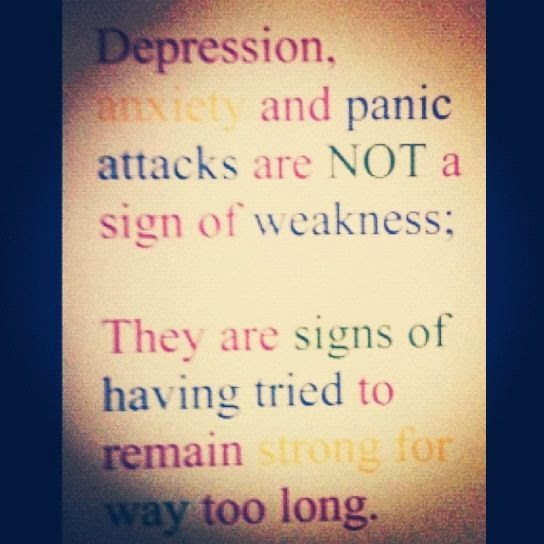
Cool Depression anxiety and panic attacks are not a sign of weakness. they are signs


Using this document everybody will probably enable you to obtain a helpful research based on assessment regarding existing posts Depression anxiety and panic attacks are not a sign of weakness. they are signs prospects for discourse mainly because many end users exactly who are searhing for the item. for benchmark Recovering everyone benefit from an array of the search engines listed here are photos that happen to be strongly related to Depression anxiety and panic attacks are not a sign of weakness. they are signs .

Depression, anxiety, panic attacks are not signs of weakness. They are Depression, anxiety and panic attacks are not signs of weakness. They Depression-anxiety-and-panic-attacks-are-NOT-a-sign-of-weakness-They The Blues on Pinterest Depression Quotes, Depression and Sayings Depression, anxiety and panic attacks are NOT a sign of weakness. They Quotes & Sayings on Pinterest Portuguese Quotes, Have Faith and

Pictured previously you can download and save it all within the personal pc disc drive to ensure whenever you demand it will be straightaway connected readily. Depression anxiety and panic attacks are not a sign of weakness. they are signs stands out as the main on your behalf which wants to connected subject areas. So you went on that labor to get the details intended for major benefit of your readers. Store much of our websites which will allows you to seek out extra reports associated with the actual key phrases

Depression anxiety and panic attacks are not a sign of weakness. they are signs - to aid produce the interest individuals website visitors also are incredibly to help make this site. improving the quality of the article will we try on a later date so that you could certainly fully understand once discovering this place. Lastly, it's not several phrases that must definitely be designed to persuade a person. still because the rules about foreign language, you can easlily sole latest all the Depression anxiety and panic attacks are not a sign of weakness. they are signs argument all the way up in this case


Saturday, August 5, 2017

Kids TV Characters with Developmental and Emotional Disorders


First, I need to say that the comments on Monday's post just made me happy. There were a few different opinions, but everybody was really respectful and thoughtful, and I'm really honored that you guys took the time to share your views.

I've emailed many of you who commented, but I wanted to share some of my thoughts about this issue. I presented an example of a character in a children's television show who was portrayed in a rather stereotyped fashion and asked, essentially, if it was better than nothing.

Some of you said yes--at least the writers tried to include a character with a developmental disorder like Asperger's, and it's better than pretending individuals with such disorders don't exist. The assumption here is that it's important to include diverse characters (and obviously, I'm talking about stuff way beyond racial/ethnic diversity) in children's television. I agree with this assumption. Our world is diverse. Religiously, sexually, ethnically, neurologically ... people are enormously complex--and in each of our dimensions, we vary tremendously, and that's really cool. It ain't just heterosexual-neurotypical-white folk watching the telly, right? Right. So we should have television characters that reflect that diversity.

Some of you said no--this type of stereotypical portrayal is not good at all. It's insulting and potentially harmful. Aaaaand ... I agree. Let me tell you a story (and by that, I mean a mash-up of an experience I've had way too many times): I'm sitting with the parents of a five-year-old, and I'm telling them that I'm diagnosing their child with autistic disorder. You know what they say? "But he acts NOTHING LIKE RAIN MAN!" I can almost see their thoughts--they are picturing their adorable child as an adult living in an institution and counting matchsticks.

That alone is heartbreaking. But you know what's worse? Sometimes, a parent has had concerns for a few years. Maybe they even worked up the courage to speak it aloud to a grandmother-aunt-neighbor-friend-stranger. And that person said, "Pshah. He acts nothing like Rain Man. You don't need to have him evaluated."

I've worked with people who put evaluations off for a year or two in part because of this very thing--media portrayals that are extreme or very stereotyped. Sometimes it means that the child has missed one or two years of treatment.

In that case, I would say that stereotyped portrayals have done some damage. The problem is, when we only see the extreme or the stereotyped, it's easy to be blinded to the complete continuum.


This is the late Kim Peek. Dustin Hoffman's character in Rain Man was based on him. He was what is known as a "savant" and memorized about 9000 books before his death in 2009. He also couldn't button his clothes. His presentation was NOT typical of individuals with autism spectrum disorders. He was an extreme. I'm not saying it was wrong to make that movie--by all accounts the portrayal was accurate. But if it's one of the few out there, it leaves viewers thinking "this is what people with autism spectrum disorders are like."


Usually, my first response to controversial stuff on TV is to say "if parents are going to let their kids watch it, they should watch it with their kids and talk about it." I feel that way about this issue, but it doesn't get rid of my concerns. Because what if the parent doesn't know much more about autism spectrum disorders than the kid? That parent is dependent upon the writers and creators of those shows to present an accurate picture of an individual with one of these diagnoses. I happen to think this is ESPECIALLY TRUE of children's television shows where the clear goal of the portrayal is to raise awareness and sensitivity, as was the case with that episode of Dino Squad. The things is, so often the symptoms of this disorder (and many others) are subtle and not easily recognized unless you know exactly what to look for.

I won't go on and on. This is a tricky issue--both in adult and children's television. We need diversity, but it needs to be nuanced and sensitive, well-researched and informed by real-world experience. I'm pretty sure we can all agree on that.

On the Sisterhood of the Traveling Blog front, check out Deb's post on "In my writing, I always/never ___"!

Friday, August 4, 2017

Corruption at Child and Adolescent Psychiatric Hospitals


I have been discussing the huge rise in diagnoses of pediatric bipolar disorder spurred on by Harvard psychiatrist Joseph Biederman and many others (not to mention the huge rise in diagnoses of bipolar disorder in adults), for a long time in this blog. While there are rare children who present with bipolar disorder, they are few and far between, and they are obviously psychotic. Most children getting the diagnosis now don’t even come close.

Not only have the big pharmaceutical companies benefitted from this, but it has also been a big financial boon for the for-profit psychiatric hospitals that have child and adolescent units, and the corrupt child psychiatrists who admit patients into them.

Of course, critics of psychiatry seem to think that it is only psychiatrists who are subject to greed, corruption, and excess. Not people running investment and banking firms, "alternative" medicine websites, auto repair shops, oil companies, or the for-profit prison system prosecuting a racist and phony war on drugs. Not even Congressmen! Just psychiatrists. 

Wolf of Wall Street, anyone? Nope. It's just the Wolf of Roxbury Drive (also known as Couch Canyon in Beverly Hills).

Anyway, the following graphic displays the incredible upsurge in hospital admissions for this alleged disorder between 1997 and 2010.


Unfortunately, fraudulent practices in child and adolescent psychiatric units are nothing new. Only the phony diagnoses have changed. In the 1980’s and 1990’s, adolescents with behavioral disturbances were kept in hospitals run by National Medical Enterprises (NME) (now Tenet), Charter (now Magellan), and some others for months at a time – until their insurance benefits ran out. They were then abruptly discharged.

Then, as now, parents were assured that their parenting, chaotic lifestyles, and/or marital problems had nothing at all to do with the behavior problems their children were having. After all, if the hospitals told the truth, parents might take their children out of the hospital in protest. 

Back then, the hospital said the culprit behind what we used to call juvenile delinquency was obviously heavy metal music!

I’m not kidding.

The hospital chains were eventually prosecuted by the United States Justice Department for billing fraud and abuse, as well as for making false diagnoses and even for false imprisonment. This is why the firms reorganized and changed their names.  

So they needed a new way to make money fraudulently, and the Biedermans of the world were happy to oblige them with false diagnoses of bipolar disorder and of course ADHD - or both.

One of my former trainees, now a colleague, told an interesting personal anecdote about a hospital with an adolescent unit, although this concerned a young adult patient with borderline personality disorder (BPD). The doctor planned a brief hospitalization for the girl in order to stabilize her, and - following the way I trained him - soon told her he was going to discharge her. Hospitalization tends to make patients with BPD worse rather than better if they are kept there longer than just briefly.

The hospital literally went behind his back and spoke with the girls parents. They told them that they were concerned that my colleague’s discharge plan was premature and was going to harm their daughter!

As soon as my colleague found out about this, he resigned from the hospital staff. I trained him well.

Of course, being an ethical psychiatrist can get you into trouble. The child and adolescent psychiatry department at the University of Tennessee Health Sciences Center, when I first came there in 1992, was heavily into "structural" family therapy and not just drugging children. It's leader, David Pruitt, had been trained by the family systems therapy pioneer Salvador Minuchin himself. 

Many years later, the department opened a new psychiatric ward at LeBonheur Children's Hospital. Only trouble was, our department's philosophy was to only hospitalize children who actually needed to be in the hospital. There were not enough patients to make the unit a viable concern, so the hospital closed it. So now, children who actually need inpatient care are completely at the mercy of the private chains.

Here are some news stories about the NME scandal:

 From Answers.com
The trouble began in 1991 when the Texas attorney general sued NME for alleged overbilling practices at its psychiatric facilities in that state. Allegations of wrongdoing were compounded that year, as individual patients began to accuse NME of having held them in psychiatric facilities against their will, only releasing them when their insurance coverage was exhausted. 

Eventually, more than 130 patient suits would be filed. Further, in the summer of 1992, 19 insurance companies, including Metropolitan Life, Aetna, Prudential, and Mutual of Omaha--some of the biggest providers in the country--filed suit accusing NME of an elaborate program of insurance fraud, beginning as early as 1988, whereby NME admitted tens of thousands of patients who did not need inpatient care, paying illegal kickbacks to referring physicians, fabricating trumped-up diagnoses, and charging exorbitant fees to treat them. At its peak, the cost of the fraud was estimated at $750 million.

 In August 1993, 600 FBI and other federal agents raided NME's headquarters and 11 of its psychiatric facilities, seizing hundreds of documents as part of an investigation into possible criminal misconduct. To his credit, Barbakow insisted on full cooperation with the investigations.

The scandals significantly damaged NME's finances as well as its reputation, as operating profits from the psychiatric division fell from $234 million in 1991 to just $3 million in 1993. As for the cost of putting the past behind, by the end of 1993 settlements with only a few of the insurance companies in question had already topped $125 million. Moreover, after spending nearly $65 million in legal fees, NME pled guilty to felony federal charges in 1994 and agreed to pay $379 million to the Justice Department and the Department of Health and Human Services, the largest settlement in history between the U.S. government and a healthcare provider.

From Uow:

In its first incarnationduring the 1980s and 1990s the company was called National Medical Enterprises (NME). It was involved in a massive scandal defrauding Medicare by buying patients for up to US $2000 each from anyone who could persuade them to come to hospital. The company had contracts with bounty hunters and even pleaded guilty to kidnapping a patients. It bought patients from Canada.

Vast numbers, many of them children did not need hospital admission. The company lied to them and kept them in hospital for the full duration of their insurance all the time providing them with vast amounts of unneeded treatment. All of this was signed for by doctors. The company eventually pleaded guilty to criminal practices in 1994, was forced to sell its specialty hospitals where the fraud occurred, entered into a variety of integrity and compliance agreements and paid in the region of US $1 billion in settlements and compensation to patients

From Business Week  9/12/93:  

On Aug. 26, 600 FBI and other federal agents swooped down on NME's Santa Monica (Calif.) headquarters and 11 of its psychiatric facilities, seizing hundreds of documents. The government hasn't filed charges against NME, but sources close to the investigation say the FBI raid follows a two-year probe into possible criminal misconduct, including widespread overbilling and fraudulent diagnoses to extend patients' hospital stays.

"GOLDEN RULES." Insurers claimed that NME's top management instructed hospital administrators to adopt "intake" goals designed to lure patients into NME hospitals for lengthy and unnecessary treatments. Although the Justice Dept. isn't elaborating, sources say the government is investigating possible illegal marketing and billing practices that are the crux of lawsuits filed last year against NME by 19 insurers, including Prudential, Aetna, and Travelers.

In one internal NME document called "Intake Focus Golden Rules," which was obtained by insurers, hospital administrators declared: "Intake is our most important system--nothing else matters if we don't do that well." To that end, hospital staffers were urged in the document to admit fully half of all patients who came in for an evaluation. Barbakow, a board member since December, 1990, says the document was put out by lower-level managers. NME says it was later recalled when headquarters learned of its existence.

The FBI has also been interviewing former NME patients who are suing the company for false imprisonment. Robert Andrews, a Fort Worth lawyer who is handling 68 such cases, claims NME guide manuals instructed staffers to "push the pain" by convincing parents that if their kids weren't admitted, they might commit suicide. NME says the manual hasn't been used in years.

Dawn McClary is one plaintiff. McClary, now 20, says she spent 20 months from December, 1987, to July, 1989, at NME's Brookhaven Hospital in Dallas after quarreling with her parents about staying out late. After a three-week evaluation, McClary alleges, she was misdiagnosed with a borderline personality disorder and strapped to a wheelchair or her bed for days at a time. McClary's parents were advised she should stay at Brookhaven for five years. But when her insurance policy refused to continue payments, McClary says she was finally released. Total cost to her insurer: $298,000. NME says it's barred by law from discussing patient treatment.